Showing posts with label history. Show all posts

27 January 2025

The thousandth Practical Fragments post!

As the title states, this is the 1000th post at Practical Fragments. This blog was conceived in 2008 over drinks at the Third Annual CHI Fragment-based Drug Discovery Conference. (Don’t miss the twentieth in April!) Teddy Zartler said he was planning on starting a blog and asked if I wanted to join. In July of 2008 Teddy wrote the first post, and every month since then has seen at least a couple new ones. I thought it would be fun to look back briefly on the past 16+ years.
 
Methods
The very first Practical Fragments post asked what screening methods people use, and this eventually led to five polls on the topic, the latest of which published just a few months ago. In our first formal poll, in 2011, the average respondent used 2.4 techniques. Today that number has grown to 5 due to the increased recognition that different methods have different strengths and weaknesses.
 
By far the biggest winner among methods has been X-ray crystallography; it jumped from sixth place in 2011 to first place in both 2019 and 2024. Crystal structures have long been prized in drug discovery, but the dramatic increases in throughput and automation over the last decade mean more structures are more available to more users.
 
Computational methods too have improved spectacularly. In 2009 we highlighted an in silico screen of around 67,000 fragments which yielded ten micromolar inhibitors. Today, screening multibillion compound libraries is becoming routine, and artificial intelligence is likely to enable even more opportunities.
 
Pitfalls
One of the reasons that it took so long for FBLD to develop was the myriad artifacts that can haunt screens run at high concentrations. For example, compound aggregation was not widely recognized until the first decade of this century, and even today too many papers are published without checking for this pathological phenomenon.
 
Similarly, pan-assay interference compounds, or PAINS, were not defined until 2010. Scientists at large companies have long known to steer clear of certain chemotypes. Now academics and folks in startups are more aware of problematic substructures, even if Dr. Saysno objects.
 
Long-time readers may recall a series of posts on “PAINS-shaming,” where we highlighted (lowlighted?) papers that lacked appropriate selectivity or mechanistic studies. Occasionally this led to productive discussions, as in this example where an author and journal editor contributed to the comments. But with the increasing use of metrics measuring social media engagement to rank articles I’ve decided that blogging about them may inadvertently reward shoddy science. If you’re looking for most of the things that can go wrong in a screen, check out this open-access review by Ben Davis and me.
 
Covalent craze
One prominent mechanism of PAINS is indiscriminate covalent modification of proteins. For many years drug hunters actively avoided covalent modifiers for fear of off-target modifications and their potentially toxic effects. Indeed, the first several mentions of covalent compounds at Practical Fragments were in the “things to avoid” category. We discussed reversible covalent modifiers in 2012 and 2013, but it wasn’t until 2014 that we wrote about intentionally irreversible fragments.
 
How times have changed! The success and safety of targeted covalent kinase inhibitors has fueled enthusiasm for covalent drugs in general, creating opportunities for fragment-based approaches. Indeed, as we discussed here, both reversible and irreversible fragment-based screens were used in the discovery of the first approved drug targeting the previously intractable target KRAS, and these learnings have been applied at multiple companies to produce an impressive armamentarium against what Darryl McConnell has called “the beating heart of cancer.”
 
To find KRAS inhibitors, researchers screened pure proteins against libraries of covalent fragments. One of the most exciting recent developments in chemoproteomics has been screening covalent fragment libraries in intact cells or cell lysates to find hits against thousands of proteins in their native environment. We first wrote about this approach in 2016, and last year we highlighted the first drug to enter the clinic from covalent screening in cells.
 
And all this is just the beginning: each of our past four annual “review of reviews” posts has featured between three and six papers focused on covalent fragment-based drug discovery.
 
Clinical compounds
My first blog post in 2008 was a brief mention of a C&EN story on FBLD, in which I noted that “an FBLD drug that reaches the market by 2011 would be a ‘psychological’ victory for the whole FBLD community.” Although I claim no prescience, I was happy to see vemurafenib approved in August of 2011.
 
Indeed, I would argue that FBLD-derived drugs are the most meaningful output and validation of the field. Our first systematic tabulation in 2009 counted just 17 that had entered clinical trials, and today there are more than 60. Like investigational drugs in general, the majority of these have stumbled, but at least eight have been approved by the US FDA, and more are working their way through clinical trials. While eight might seem like a modest number, the number of patients they’ve helped is orders of magnitude greater.
 
Closing thoughts
There are far more themes in a thousand posts than I could summarize in a single one: metrics, induced proximity, and newer methods such as cryo-EM all come to mind. But as this post has already surpassed 1000 words, I’ll wrap it up.
 
One minor frustration has been the sparsity of comments; it sometimes feels as if I’m blogging into the void. That said, I’m pleased that some posts may have led to new research, such as this. And blogging can be its own reward: I sometimes find myself using the “Search This Blog” function on the top right-side of the page when I’m trying to remember a paper from years ago.
 
Since Teddy left the FBLD field several years ago I’ve been writing most of the content, with occasional guest posts (such as this from Glyn Williams). At the current rate it might take a couple decades for Practical Fragments to reach 2000 posts, if we even get there. But for now, I’d like to thank each of you for reading. I hope you enjoy it and that is has, at least occasionally, made your scientific pursuits more practical.

19 April 2020

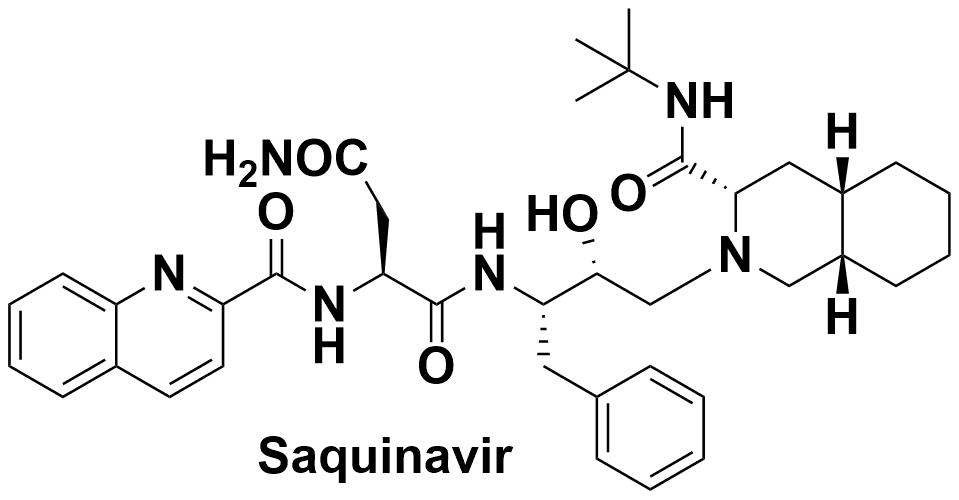
Back to the Future: HIV protease offers lessons for SARS-CoV-2

Today’s guest post is by Glyn Williams (University of Cambridge). Fragment aficionados will recognize Glyn as the former VP of Biophysics at Astex, but before that he worked at Roche. His experiences there in the 1990s have lessons for today. -Dan Erlanson

In two recent Practical Fragments posts (here and here), Dan Erlanson noted efforts which will allow the scientific community to contribute to drug design efforts against the SARS-CoV-2 main protease (Mpro). Leading the charge at the moment is the COVID Moonshot consortium who have already received design proposals for covalent inhibitors, based on the structures of fragments bound to Mpro that have been generated by researchers at the Diamond Light Source. At the same time, more information about Mpro, including its substrate preferences, is being published. Soon there will be an urgent need to define a selection procedure which will allow valuable drug candidates to be progressed.

A similar situation was faced in 1985 when HIV protease was being considered as a drug target for AIDS. An excellent description of a pragmatic, and ultimately successful, procedure was published in 1993 by Noel Roberts and Sally Redshaw of Roche in The Search for Antiviral Drugs:Case Histories from Concept to Clinic.

When the project began there was no definitive proof that this aspartyl protease was essential for viral replication in human cells and that it could not be substituted by a cellular protease. However, its in vitro ability to cleave a Phe-Pro or Tyr-Pro peptide bond (amongst others) marked it out as unusual, and that was sufficient encouragement for Roche to initiate a discovery programme. Inhibitor design then took advantage of this feature to build in selectivity over human aspartyl proteases, ultimately giving a high therapeutic index while also improving inhibitor absorption after oral administration. 
 
Critical issues, such as the decision to target the HIV-1 viral strain, access to suitable protease constructs and clear criteria for project progression, were defined early on. Novel protease and anti-viral assays were then developed in parallel with transition-state mimetic leads. From the start, it was recognised that the low aqueous solubility of the optimal peptide substrates could imply that peptidomimetic inhibitors were also likely to have poor physico-chemical properties. At the time there was no structural information on the enzyme or its complexes, so there was little opportunity to avoid these shortcomings.

As with COVID-19, the worldwide health implications of HIV were obvious and scientific interactions between different research groups were driven by a spirit of cooperation. Public laboratories contributed clinical data and provided access to assays for viral activity. In 2020 the ability to share data has improved beyond recognition but the ability to interpret and act on it is still subject to political and commercial pressures. At Roche, a series of hydroxyethylene inhibitors was not pursued due to its prior inclusion in multiple patents for renin inhibitors. In addition, sensitivity to criticism from AIDS activist groups during the project discouraged Roche from developing follow-up candidates later.

Many current predictions and public expectations about COVID-19 now depend on the availability of vaccines in 2021. After more than three decades of research, no preventative vaccine is yet available for HIV. However, the ability to treat a viral infection, even with a drug that contains and controls the infection rather than eliminates it, should not be undervalued. In 1993 the Roche HIV protease clinical candidate, Ro 31-8959, was in Phase 2 evaluation. Roberts and Redshaw pointed out then that lowering a patient’s viral load would reduce the risk of further infections amongst health-care workers and social contacts, while the persistence of immature and non-infectious viral material in cells could stimulate the patient’s own immune system to eliminate the virus.

Roberts and Redshaw concluded their 1993 analysis with the statement that "although there is still much work to be done, we remain very hopeful that Ro 31-8959 will make a positive contribution to the therapy of AIDS". Two years later Ro-31-8959, as Saquinavir, was approved by the FDA and, with Ritonavir, a second protease inhibitor from Abbott Labs, led to a 64% reduction in deaths from AIDS in the US over the next 2 years. Let us now hope for the same degree of success from new COVID-19 treatments.

11 June 2018

The origins and development of FBDD

Most of the papers Practical Fragments cover are limited in scope: a new chemical probe, say, or an NMR method. Even in our annual review of reviews, most of the publications have a focus, such as a particular technique. But a paper just published in Drug Discovery Today, by Iwan de Esch (VU University Amsterdam) and an international group of collaborators (including FragNet scholar Angelo Romasanta), is a rather different beast.

The (open access) paper is a bibliometric analysis of FBDD. The researchers first assembled all papers in Thomson-Reuter’s Web of Science which had “fragment” and one of several other terms as a keyword. If you try this at home you will find all sorts of irrelevant topics (such as antibody fragments), so these were manually removed, leaving 2781 publications. But many early papers did not refer to fragments, so all references that had been cited at least ten times were added, resulting in a total of 3642 papers published between 1953 and 2016. What can be learned with such a data set?

For one thing, the term “fragment-based drug discovery” didn’t appear until 2002. In the early 2000s “fragment-based lead discovery” was more common, though for roughly the past decade the former term and “fragment-based drug design” have co-dominated.

The researchers also examined the number of citations each paper has received to reveal interesting trends. For example, in the early years (1996-2001), industry dominated. Indeed, 9 of the 10 most cited papers of all time come from industry, and the sole outlier describes the protein data bank (PDB). In the past decade academics have become significant contributors, which is not surprising given their stronger incentive to publish.

Moving beyond raw citations, the researchers manually classified papers into scientific disciplines (methods, molecular basis, applications, and crystallography) to explore the diffusion of knowledge. This reveals the centrality of the 1996 “SAR by NMR” article, which was the first to cite theoretical and computational approaches and also bring in biophysics. Deservedly, this is the most highly-cited paper (454 citations within the set of articles, and currently >2100 total according to Google Scholar).

Our most recent poll of fragment-finding methods revealed a spike in crystallography, driven both by higher hit rates as well as technical advances, and this is also seen in the paper, where the 2011-2016 period shows a significant increase in crystallography over earlier five-year periods. As we’ve also noted, there has been a shift in content: while many earlier publications focused on techniques, medicinal chemistry has become a much more common subject in recent years.

There is plenty more here, and the paper is fun reading for anyone in FBDD, whether you have lived through the history or are new to the field. My one quibble is that the list of 3642 papers is not provided as supplementary material. Indeed, it is the open nature of the PDB that has made it such a valuable resource. Hopefully the authors will release their underlying data so others can build upon it.

30 September 2013

MIP and MDP

Dan and I are were at the CHI Discovery on Target meeting last week.  It is highly focused on target validation and early stage hit generation.  This is NOT a chemistry conference, although there were plenty of chemists and chemistry talks; the target audience is biologists.  As such, it was a great arena to be teaching about fragments and educating a whole different phyla of FBDD consumers.  It was also nice to meet people and have them say, "Oh, I love the blog."  Of course, I just say, try commenting, that's manna to bloggers.  The nice thing is people generally understand FBHG, unfortunately I think they generally misunderstand it.  Why?

I think part of the problem is that the Most Impactful Papers (MIPs) in the field are also the Most Destructive Papers (MDP) in the field.  So, what are the MIP for this field?  For me, the criteria are pretty straight forward: one or two papers that are seminal to understanding the field.  As you may already be guessing, my list of MIP intersects my MDP.  

Most Impactful Papers: 
The Rosebowl of Fragment Papers: SAR by NMR.  This is the paper that showed that NMR was not bound by doing structures, but was a viable screening paradigm.  It started the whole "Fragment" thing. 
  • The Rationale Behind it All: The Leach and Hann Molecular Complexity paper.  If I had one paper to give to someone to explain why you should use fragments, this is it.  The first three graphs should be in every introduction to FBHG. 
  • The Voldemort Rule: The Rule of Three paper.  This paper has defined what a fragment is for a decade. 
  • Fragments get a name (that's never used): Fragonomics.  OK, self-referencing is not cool, so this should really be Dan's paper, the first review on FBDD. 
  • Pfizer lifts the curtain: Pfizer's fragment library paper. I love this paper because it gives a great overview of how Big Pharma put its fragment library together (think laser pointers!). 
This is obviously a very short and incomplete list, and totally my opinion.  Let me know what you think MIP are in the comments.

So, what are "destructive" papers?  Those are the papers that require me to spend a lot of time explaining why what people understand is not really a good general, practical approach.  
Most Destructive Papers:
  • I think THE most destructive paper is also the most impactful: SAR by NMR.  How can that be you say?  Easy.  Because of this paper, the vast majority of people who "have heard" of fragments think that you need to label protein to do use NMR for fragments.  While, target-based screening is really powerful, I don't think it should be the first thought for screening, but is more impactful on active follow up.  I can here the counterarguments coming, but WAIT there's more.  They used linking, rather than growing.  I think most people would agree that this is the "Serendipity" approach.  I think this territory is well trod on this blog.  Lastly, warheads. 
  • While it had its place the Rule of Three paper has also become destructive.  This is a "hot" topic, but my main problem is the slavish devotion to an empirical "Rule".
What are your thoughts?  

I am also cross-posting this on my site http://www.quantumtessera.com/325/ and the LI group to see if maybe a different venue will generate more comments.


11 July 2010

So Long, and Thanks for all the Fish

I am writing this to say thank you to everyone who reads this blog, and those who have contributed to this blog. When Dan and I started this, it was after meeting at a FBDD conference in San Diego. We decided that this field needed something like this. There are now LinkedIn groups, Facebook groups, other blogs about FBDD (all linked to the right). As many of you know, my current position does not involve FBDD. FBDD has been a passion of mine since I got involved in 2001. I appreciate my boss at the time Mike Shapiro for giving me the chance to set up and lead the FBDD efforts at Lilly. It was a fantastic experience and very successful. I also want to thank Mike for co-editing the book with me (please buy a copy, every copy earns me something close to three cents ;-)). I want to acknowledge all the great friends I have made through the years, including Dan who has picked up the onus of publishing this blog and has done and will continue to do a fantastic job.
I have always said that research carries a two year shelf-life. It's been almost two years since the book came out, that means I am done. I have nothing new to add to the field (and probably haven't for longer than two years). This means no more embarassing questions when I give talks on FBDD about what I doing now (which is nothing in FBDD). It is exciting to follow the field, but it is also really tough not being a part of it.
I wish you all the best of luck and ask that you don't be strangers. I will be speaking on NMR in the upcoming months, and am always happy to add more NMR speaking engagements (hint hint).