Showing posts with label book review. Show all posts

29 October 2017

On Par with the Pyramids... a New Book on Drug Discovery!

There are many great testaments to humanity's perseverance.   The Pyramids at Gizahttps://www.ancient.eu/uploads/images/display-5687.jpg, the Cathedral of Notre Dame https://upload.wikimedia.org/wikipedia/commons/thumb/b/be/Notre_Dame_de_Paris%2C_East_View_140207_1.jpg/220px-Notre_Dame_de_Paris%2C_East_View_140207_1.jpg, the Great Wall of Chinahttp://vizts.com/wp-content/uploads/2016/02/great-wall-of-china-view.jpg, and the most recent Applied Biophysics for Drug Discovery .   This blog typically reviews the content of the book, but I thought it would be interesting to describe how the book came together.
It is said that if you see inside a hotdog factory you'd never eat a hotdog again.  So, how did this hotdog get made?  Flash back 3 years, and Don Huddler (at that time at GSK) reaches out to me and says, "Hey do you have a contact at Wiley.  I have a great idea for a book." "Sure Don, here you go."
A week or so later, Don invites me to lunch so we go to greatest restaurant ever!!!  Over lunch , and maybe my second beer, Don says, lets write this together.  After almost choking on my Cajun Meatloaf GC, I said NO WAY!!!  There may have been at least one more beer involved but I agreed after Don said he would do all the heavy lifting.

Flash forward a few weeks, and Wiley accepted our book proposal, with 30 listed chapters, with 5 sections.  Part of the fun part is that they send your proposal out for review, so just like a paper, you get reviewer comments.   You then sign a contract with the Publisher that says you will deliver so many pages: 556 in our case by 31Jan2016 (14 months after the contract was signed).  Don had already defined many of the authors who he had thought would be appropriate.  So, at this point, you send out letters to authors and ask them to contribute.  So, "You would be perfect to write a chapter for our upcoming book on [insert what you want them to write on]."  Then you wait and hope that they actually respond.  Many authors responded right away, and it is not personal when they say no.  It is a pretty significant amount of work to contribute to a chapter.  Then you work with the authors to define the time frame of when drafts are due, and so forth.

You then wait and hope the authors deliver on time.  Some do, may don't.  So then you become Nagger-in-Chief.  "Where's the chapter draft?  Is it coming soon?"  As someone famous said, life is what happens while you are making other plans.  During the summer of 2015, GSK was re-orging, and Don decided to go to Law School full time.  So, here we are trying to get drafts done, edited and returned to authors and one editor makes a major career change.  Two months after that, I followed Don in changing careers, leaving the glamorous consulting life to join Pfizer.  As hard as we tried, our new careers required our focus and the book got short shrift.  

For some authors who had delivered on time, this was frustrating.  We had a given deadline and they delivered.  We dropped the ball for them.  For other authors who were less than timely in their contributions, they did not get nagged sufficiently, causing further delays.  2016 was by and large a horrible year if you were an author with a delivered chapter, and a fantastic year if you hadn't delivered a chapter yet.  And of course, as time drags on, other career changes happen.  One primary author retired, one changed jobs and stopped responding to emails, and so on.  So, our initial 20 chapters (from the 30 we wanted) was whittled down to 15 chapters.  

Its now 2017, and the book is a year late, and Don and I are still trying the best we can to manage new careers and editing the book.  Authors are angry with the delay and I didn't blame them.  We were actually able to finally get all the chapters together and to the publisher.  Phew, most of our work is done.  STOP!  One chapter got completely left out of the final submission.  So, the scramble was on to make sure that it was included.  You can see which one when you try to figure out the order of chapters.   

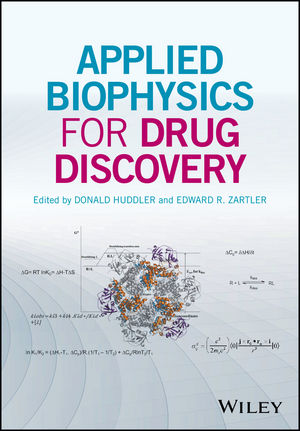
So, what is the role of the Publisher during this whole thing you ask?  I don't know.  My experience with the publisher on this book was VERY different from the first one.  I got the feeling that this book was a low priority for them.  Our emails took weeks sometimes to be responded to.  It was frustrating; but something we did not want to share this with the authors.  So, after this it is mostly on the publisher, but we had to design the cover.  To explain it, everything on the cover is from a chapter in the book: the structure and equations.  We get to galley proof stage and final publication, and Wiley tells us we need to index the book. This is a change from the first time.  Don and I take the option to have them do it for us and take it out of royalties (which is something on the order of 50$ a year).  So, finally in July of this year, it was finalized and given a publication date.  Project done.  So,  let me say to all the authors, thank you so much for being a part of this book.

So, what did I learn co-editing this book?  No matter how many beers I get fed, I will never EVER edit a book again.  There is actually a word ambit. I have a reputation for being "provocative" (from a reviewer); this probably didn't help.  The quality of the contact at the publisher makes a huge difference.  I hope our contact at Wiley was new and inexperienced because this experience was far worse than the first time I did the book.

So, what is inside the book?  291 pages (out of a promised 556).   There are 14 chapters of awesomeness, featuring people featured on this site previously.  This book is focused on biophysical methods and how they are used to triage and advance leads.  Many of these topics have been covered in depth on this site: thermodynamics, protein-protein interactions, HDX, MST, SPR, WAC, 1D NMR, Protein NMR, and how to use them in terms of residence time.  There are two case studies, one from Pfizer and one from FOB (Friend of the Blog) Michelle Arkin.  Lastly, and you can figure this out, there is a chapter from Martin Scanlon on fragment libraries.  I won't go into actually reviewing the book; that would be a major conflict of interest (I do have a financial interest in it and Don and I need to pay for that indexing!).

I would appreciate comments on it here, and of course any other questions I would be happy to answer.

24 August 2015

Fragment-Based Drug Discovery

This is the straight-to-the-point title of a new book published by the Royal Society of Chemistry, edited by Steven Howard (Astex) and Chris Abell (University of Cambridge). It is the second book on the topic published so far this year, and it is a testimony to the fecundity of the field that the two volumes have very little overlap.

After a brief forward by Harren Jhoti (Astex) and a preface by the editors, the book opens with two personal essays. The first, by me, is something of an apologia for Practical Fragments and the growing role of social media in science (and vice versa). If you’ve ever wondered how this blog got started or why it keeps going, this is where to find out. The second essay is by Martin Drysdale (Beatson Institute). Martin is a long-time practitioner of FBDD, dating back to his early days at Vernalis (when it was RiboTargets) and he tells a fun tale of “adventures and experiences.”

Chapter 1, by Chris Abell and Claudio Dagostin, is entitled “Different Flavours of Fragments.” With a broad overview of the field it makes a good introduction to the book. There are sections on fragment identification, including the idea of a screening cascade, as well as several case studies, some of which we’ve covered on Practical Fragments, including pantothenate synthetase, CYPs, RAD51, and riboswitches.

The next two chapters deal with two of the key fragment-finding methods. Chapter 2, by Tony Giannetti and collaborators at Genentech, GlaxoSmithKline, and SensiQ, covers surface plasmon resonance (SPR). This includes an extensive discussion of data processing and analysis, which is critical for improving the efficiency of the technique. Competition studies are also described, as are advances in hardware, notably those from SensiQ. This is a good complement to Tony's 2011 chapter.

Chapter 3, by Isabelle Krimm (Université de Lyon), provides a thorough description of NMR methods, both ligand-based (STD, WaterLOGSY, ILOE, etc) and protein-based (mostly HSQC). The chapter does a nice job of describing techniques in terms a non-specialist can understand while also providing practical tips on matters such as optimal protein size and concentration.

Chapter 4, by Ian Wall and colleagues at GlaxoSmithKline, provides an overview of FBLD from the viewpoint of computational chemists. The chapter includes some interesting tidbits, such as the observation that fragment hits that yield crystal structures tend to be less lipophilic but also contain a smaller fraction of sp3 atoms and more aromatic rings. The researchers note that the current fashion for “3D” fragments is yet to be experimentally validated. They also include accessible sections on modeling, druggability, and integrating fragment information into a broader medicinal chemistry program.

The remaining chapters focus on specific types of targets. Chapter 5, by Miles Congreve and Robert Cooke (both at Heptares) is devoted to G protein-coupled receptors (GPCRs). This includes descriptions of how to screen fragments against these membrane proteins using SPR, TINS, CE, thermal melts, and competition binding. It also includes a detailed case study of their β1 adrenergic receptor work (summarized here). Congreve and Cooke assert that, although many of the GPCR targets screened to date have been highly ligandable, technical challenges only now being addressed have caused this area of research to lag about a decade behind other targets. They predict a bright future.

Rod Hubbard (Vernalis and University of York) turns to protein-protein interactions in Chapter 6. After describing why these tend to be more challenging than most enzymes and covering some of the methods for finding and advancing fragments, he then presents several case studies, including FKBP (one of the first targets screened using SAR by NMR), Bcl-2 family members (including Bcl-xL and Mcl-1), Ras, and BRCA2/RAD51. He concludes with a nice section on “general lessons,” which boils down to “patience, pragmatism, and integration.” As Teddy recently noted, this can lead to substantial rewards.

Allosteric ligands have potential advantages in terms of selectivity and addressing otherwise challenging targets, and in Chapter 7 Steven Howard (Astex) describes how fragments can play a role here. This includes how to establish functionality of putative allosteric binders, as well as case studies such as HIV-1 RT, FPPS, and HCV NS3. Astex researchers have recently stated that they find on average more than two ligand binding sites per protein, and this chapter includes a table listing these (including 5 binding sites each on bPKA-PKB and PKM2).

The longest chapter, by Christina Spry (Australian National University) and Anthony Coyne (University of Cambridge) describes fragment-based discovery of antibacterial compounds. After discussing some of the challenges, the authors report several in depth case studies including DNA gyrase, DNA ligase, CTX-M, AmpC, CYP121, and pantothenate synthetase, among others. At least one fragment-derived antibacterial agent entered the clinic; hopefully more will follow.

Chapter 9, by Iwan de Esch and colleagues at VU University Amsterdam, focuses on acetylcholine-binding proteins (AChBPs), both as surrogates for membrane-bound acetylcholine receptors and as well-behaved model proteins on which to hone techniques (see for example here, here, and here). Since AChBPs have evolved to bind fragment-sized acetylcholine, these proteins can bind tightly to small ligands; 14-atom epibatidine binds with picomolar affinity, for example, with a ligand efficiency approaching 1 kcal mol-1 atom-1.

And Chapter 10, by Chun-wa Chung and Paul Bamborough at GlaxoSmithKline, concisely covers epigenetics. Bromodomains are well-represented, including a table of ten examples (see for example here, here, here, here, here, and here). Happily, although some of these projects started from similar or identical fragments, the final molecules are quite divergent. However, the authors note that much less has been published on histone-modifying enzymes, such as demethylases and deacetylases, perhaps reflecting the challenges of achieving specificity with what are often metalloenzymes.

Finally, this is the 500th post since Teddy founded Practical Fragments way back in the summer of 2008. Thanks for reading, and special thanks for commenting!

07 April 2009

Book Review on FBDD Book

There is a review just publish ASAP in JACS of the Zartler and Shapiro edited book on FBDD. Overall, it is a nice review (Thanks to Andrew and Phil). There is one error (chapters 4-11 are EIGHT chapters, not seven) and one critique that I want to address.

Although there is a paragraph in Chapter 3 covering X-ray methods, which are mentioned in the introductory chapters, it would have been nice to have an entire chapter dedicated to these methods as several groups in industry have applied them successfully.

Mike and I made a conscious choice NOT to include any chapters on X-ray. We thought that of all the methods for FBDD X-ray has been done; there was nothing new to the field that our book could contribute. The focus of this book was on practical applications and newer techniques. There are a plethora of nice reviews out there, X-ray focused companies, and three chapters entirely or mostly about using X-ray in the Jahnke and Erlanson book.
What are the feelings of others? Did we swing and miss by leaving that topic out of the book or is X-ray the "mature" FBDD method? I would argue (and did in my editorial choice) that there is little left to say about X-ray that hasn't already been said.
[Update]: Zartler and Shapiro:Amazon.com Sales Rank: #1,595,845 in Books.
Jahnke and Erlanson: Amazon.com Sales Rank: #1,238,437 in Books

23 October 2008

It's Here

The biggest thing Ever!!!

By that I mean this
There is a link to buy it on the side of the blog. The book published on 17OCT2008 and is already getting great reviews. Here are a few choice ones:

"Fantastic dear, can you explain to me what you do again?" Teddy's Mom
"Cool." Teddy's Brother
"That's nice dear." Teddy's Wife.


WOW, with such enthusiastic support, the book will surely hit the New York Times Bestseller list.
Seriously, I think this is an excellent complement to the Erlanson/Jahnke book focusing on the real details of how to do FBDD. If you buy a copy, I will personally autograph it for you. If you buy it, and send a crisp, clean 20 $ bill to me, I won't.